The lost years
Where Jesus could have traveled and what he may have encountered between youth and ministry. Explore ages 12–30 →
Documentary research guide
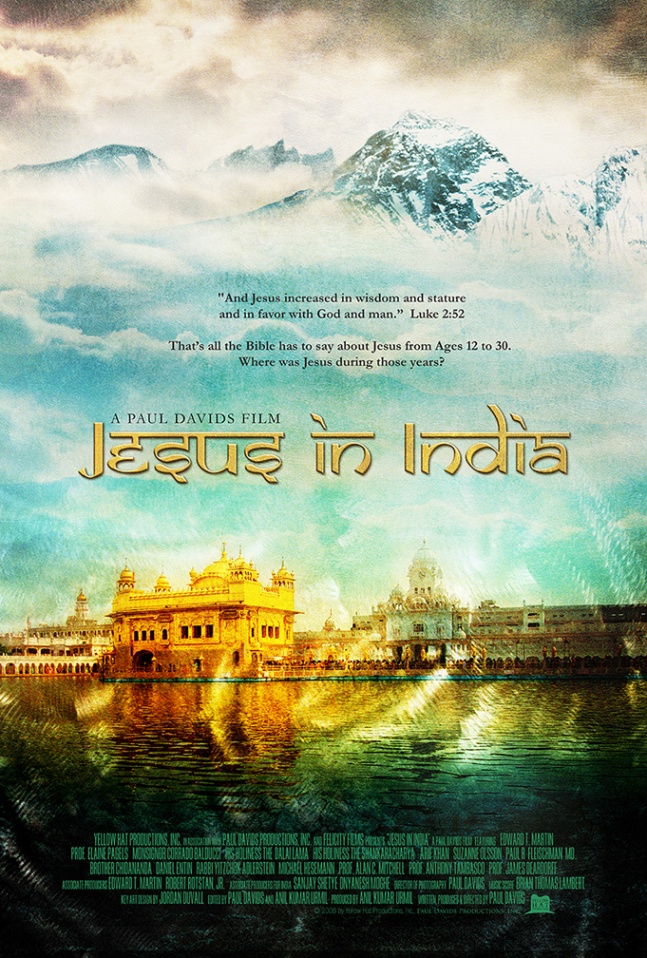
Edward T. Martin’s investigation follows the missing years of Jesus, the possibility of survival after crucifixion, and the long trail east—from ancient trade routes and Himalayan testimony to Kashmir and the Roza Bal tomb.
The investigation
The documentary does not depend on one manuscript or one witness. Its force comes from the way separate traditions, travel routes, textual questions, and physical claims converge on the same possibility: that Jesus’s life extended far beyond the familiar New Testament chronology.
The canonical narrative moves from Jesus at roughly twelve years old to his baptism at about thirty, leaving the central formative period of his life unrecorded.
The ancient Silk Road connected the Mediterranean world with Persia, Afghanistan, Kashmir, and India. Long-distance travel was difficult, but neither unknown nor impossible.
Nicholas Notovitch reported a Himalayan account of Issa in India. The documentary follows later witnesses and investigators—including Swami Abhedananda and Nicholas Roerich—while acknowledging continuing disputes about the manuscript.
Participants compare sayings attributed to Jesus with Indian ideas about inward spiritual knowledge, divine light, nonviolence, meditation, and the kingdom within.
The film examines the short time on the cross, the unbroken legs, treatment with aloes and myrrh, later eating and walking, and secret appearances as evidence considered by survival proponents.
If Jesus survived, the documentary argues that traveling east toward communities linked with the lost tribes of Israel would provide both refuge and a continuation of his mission.
The final trail reaches Srinagar, where the Yuz Asaf tradition, the reported east-west inner grave, carved feet bearing wound-like marks, and accounts of an Israelite prophet converge at Roza Bal.
Research route
Each stage can be studied independently, but together they form the documentary’s complete argument.
Where Jesus could have traveled and what he may have encountered between youth and ministry. Explore ages 12–30 →
The Saint Issa reports, later corroboration claims, and the controversy surrounding the Himalayan sources.
Medical, textual, and narrative arguments that Jesus may have survived rather than died during crucifixion.
The identity of Yuz Asaf and the physical, historical, and traditional claims centered on Roza Bal.
Talmud Jmmanuel research
Martin sought out Deardorff specifically for his study of the post-crucifixion traditions. These are all of Deardorff’s attributed statements in the supplied documentary transcript.
“My second book goes into the stories of Jesus travels to India and back, especially after the crucifixion. It is pretty well known to anyone who studies the religions that Islam doesn't believe that Jesus died at the cross. This is, of course, heresy to the Christians. But the idea that he could have survived the crucifixion, that's another viewpoint that has quite a lot of support.”
James Deardorff
“Holger Kersten, in his book Jesus Lived in India, gives quite a lot of this evidence that Jesus had undergone the crucifixion, did survive, and traveled on east. And I've looked into this and find that quite a bit of this is credible.”
James Deardorff
“Apparently even in the Gospel of Luke it mentions that he ate with the disciples afterwards. The resurrected body doesn't have to eat, presumably. He wouldn't have to walk before them on the road to get from Jerusalem to Galilee, as he was said to do. I mean, if he were resurrected, he could just pop in and out wherever he wanted, supposedly.”
James Deardorff
“Legends have it that Jesus lived a long time in northern India, in Kashmir, and that he has a tomb there. This tomb still exists today, but is well guarded; no one can get in.”
James Deardorff
The early journey
The documentary revisits the account attributed to Nicholas Notovitch, the later journey of Swami Abhedananda, and Nicholas Roerich’s reports from the Himalayan region. Their testimony is not identical, and the manuscript remains contested, but the sequence is central to the modern Jesus-in-India investigation.
Explore the Notovitch collection →The later journey
The second half of the film asks whether a living Jesus could have left Roman territory, continued east among dispersed Israelite communities, and ended his life in Kashmir. That inquiry culminates at the shrine known as Roza Bal.
Examine the Roza Bal case →Editorial note: This page summarizes the supplied transcription of the 2008 documentary and identifies arguments made by its participants. Quotations remain attributed to their speakers; disputed historical conclusions are presented as claims to be examined through the linked research and source index.